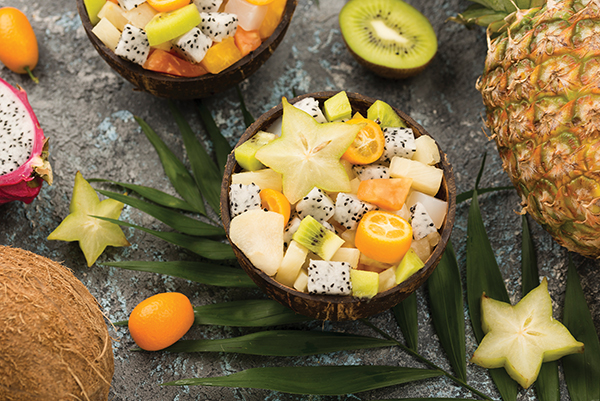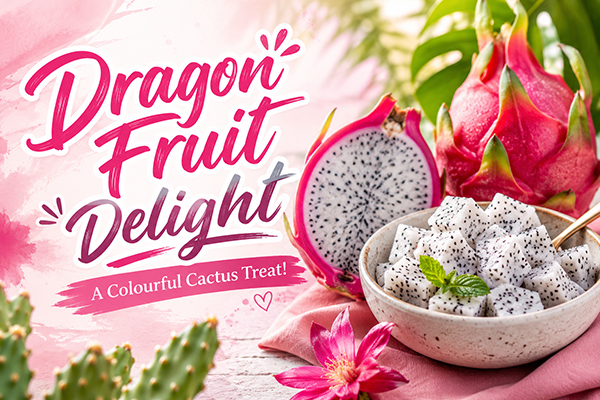
Dragon fruit, with its eye-catching pinkish-red skin and green-tinted scales, is a standout in any market. Inside, you’ll find a striking white or crimson red flesh, dotted with tiny black seeds. Its texture resembles watermelon, but the taste leans more towards kiwi—a delightful surprise for your taste buds!
In Thailand, dragon fruit thrives in farms and markets, often requiring a local’s guidance to spot its unusual cactus origins, which trace back to South America. This eco-friendly plant not only absorbs carbon dioxide at night but also purifies the air by releasing oxygen.
These stunning plants grow tall, supported by stakes in fields with water-filled trenches. At night, they bloom fragrant white flowers that attract bats and moths for pollination, but these blossoms last only for one night before giving way to the fruit.
Mildly sweet and best enjoyed chilled, dragon fruit can be eaten fresh or tossed in fruit salads. Nutritionally, it’s a powerhouse—low in calories and high in fiber, it boasts health benefits such as lowering cholesterol and blood pressure and preventing constipation. Rich in calcium, phosphorus, vitamins B and C, and antioxidants, it helps combat harmful free radicals in the body.
Dragon fruit plants naturally flower from March to September, with fruits ready for harvest from April to October—yielding one to two harvests each month. To enjoy, simply slice in half and scoop out the delicious flesh. A tropical bliss not to be missed during your travels!
July 2026.