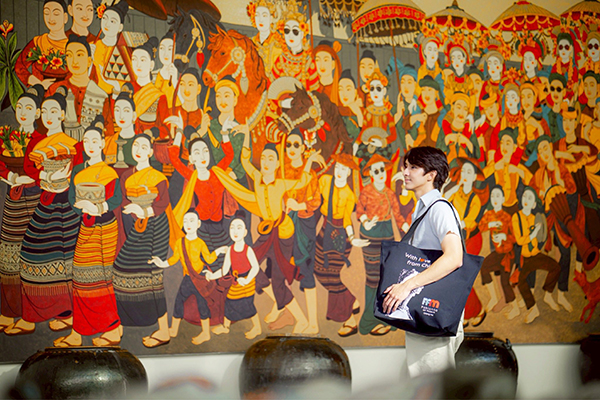
Chiang Mai continues to evolve as a city where tradition and creativity meet—and at the heart of this movement is FAM Fahlanna Art Museum, a space that redefines what a museum can be.
Set within a former tobacco factory in the old town, the building itself already sets the tone. High ceilings, industrial textures, and preserved architectural elements hint at its past, while carefully considered design introduces a new identity. The result is a setting that feels both grounded in history and distinctly contemporary.
FAM presents itself not simply as a place to view art, but as an immersive cultural journey. Across a series of thoughtfully designed environments, visitors are guided through Chiang Mai’s heritage using storytelling, light, sound, and spatial design. The experience blends Lanna traditions with modern techniques, creating moments that are reflective, engaging, and at times quietly unexpected.
It is a space that appeals across generations. Some visitors come for the cultural insight, others for the visual experience, and many simply to spend time exploring something different in the center of the city. What they find is not a traditional museum, but a place that encourages movement, observation, and a sense of discovery.
THE JOURNEY INSIDE
Inside FAM, the experience unfolds as a sequence of interconnected environments, each offering a different perspective on Chiang Mai’s identity.
The journey begins with a sense of imagination and immersion, where light and sound create a transition away from the outside world. From there, the atmosphere shifts into spaces that reflect the spiritual and royal foundations of Lanna culture, presenting Buddhist art, historical figures, and symbolic design elements in a setting inspired by traditional architecture.
As the experience continues, attention turns to everyday life. Scenes of traditional homes, handcrafted objects, and cultural practices reveal the rhythms and values of earlier generations. These are followed by spaces dedicated to craftsmanship and textiles, where materials, patterns, and techniques reflect the diversity and identity of communities across Thailand.
Memory and transformation become central themes in the next stages of the journey. Historic photography, collected objects, and curated environments evoke the passage of time and the changing face of society, allowing visitors to connect personal impressions with broader cultural narratives.
Moments of immersion return through mirrored spaces and large-scale projections, where technology is used to create environments that feel expansive and atmospheric. These spaces offer a pause and an opportunity to observe, reflect, or simply experience the visual surroundings.
The journey concludes in a contemporary gallery that continues to evolve, presenting rotating artworks and giving space to both established and emerging artists. It is here that the past and present come together, reinforcing the idea that culture is not static, but constantly in motion.
COMMUNITY, EVENTS & LIFESTYLE
Beyond the exhibition rooms, FAM has quickly become part of Chiang Mai’s wider creative and cultural community.
The museum regularly hosts temporary exhibitions, offering a platform for local artists to present their work. These exhibitions have been open to the public free of charge, encouraging accessibility and creating opportunities for both residents and visitors to engage with contemporary creativity in an informal way.
The space has also welcomed a wide range of events. A recent concert by the Chiang Mai University Symphony Orchestra brought music into the museum setting, while gatherings such as the Adopt Me-ow Cat Shelter community event highlighted its role as a place for connection and shared purpose. Creative initiatives like the Film Village Film Festival introduced workshops and discussions, adding another layer to the museum’s programming.
FAM has also attracted international attention, hosting participants from events such as Miss Wellness World and Mister Tourism World 2026, further positioning the museum as a space that bridges local culture with a global audience.
This ongoing activity reflects a broader intention: to create a living space rather than a static display. Each visit can feel slightly different, shaped not only by the exhibitions but also by the people and events that pass through.
Completing the experience is Fahtara Coffee, located within the museum itself. Designed as a relaxed and welcoming space, the café offers visitors a place to pause, reflect, and extend their visit. With a focus on locally sourced ingredients and a warm, unpretentious atmosphere, it brings together elements of community, hospitality, and everyday life.
FAM Fahlanna Art Museum is, ultimately, more than a place to visit. It is a space to explore, to spend time, and to return to; a space where art, culture, and community continue to come together in the center of Chiang Mai.
FAM Fahlanna Art Museum
Wiang Kaew Rd. Sriphoom. Chiang Mai. Located next to Fah Lanna Spa in old town.
063-459 9989
www.fahlannaartmuseum.com
Daily 10 am to 7 pm. Closed on Wednesday
June 2026.