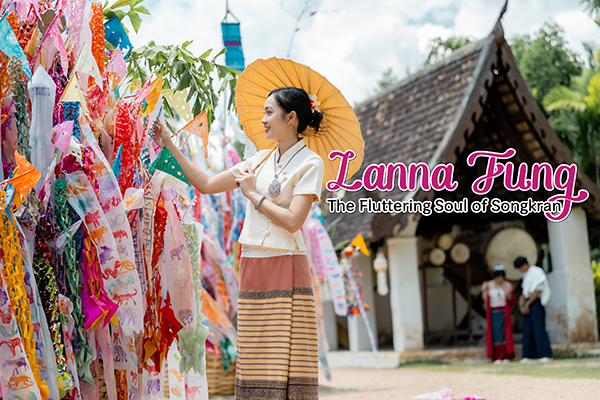
When Songkran arrives in Chiang Mai, the city doesn’t just roar with water-soaked fun; it unfolds a quieter, equally vibrant thread of tradition known as the Tung. These handmade Lanna flags, fluttering gracefully above the temple grounds, are the true heartbeat of the Northern Thai New Year. Far from being mass-produced novelties, they are intimate, community-crafted symbols that bring color, meaning, and a whisper of history to the festivities. To understand the Tung is to understand the soul of the North—a culture that balances exuberant joy with deep-rooted spiritual devotion.
A Masterpiece of Paper and Bamboo
A traditional Tung is a slender vertical banner, often crafted from lightweight fabric or delicate rice paper stretched over bamboo slats. These flags are designed to catch even the slightest breeze, creating a rhythmic dance that symbolizes the movement of life and spirit. The surfaces are adorned with bold, hand-painted designs or intricate paper-cut patterns.
Most often, these motifs represent the twelve animals of the Chinese zodiac. In Lanna culture, your birth year animal holds significant power over your destiny. During Songkran, devotees specifically choose a Tung featuring their zodiac animal—be it the courageous Tiger or the wise Naga—to plant in the temple. This act is believed to provide personal protection, ward off bad luck from the previous year, and invite a fresh start for the new one.
Understanding the Duo: Tung Sai Muu vs. Tung Deaw
During your stroll through the temple grounds, you will notice two distinct styles of paper flags, each carrying its own specific ritual weight:
The Sacred Mountains of Sand
One of the most beautiful sights during Songkran is the “Sand Pagodas” (Chedi Sai) blooming with a forest of these colorful flags. This tradition is rooted in a thoughtful, centuries-old act of merit-making. Throughout the year, as worshippers visit the temple, they inadvertently carry away small amounts of sand on the soles of their shoes. To “repay” the temple for this unintentional “theft” of holy ground, locals bring buckets of fresh sand back during Songkran.
They shape this sand into miniature mountains and crown them with a mix of Tung Sai Muu and Tung Deaw. It is a striking visual: hundreds of bright flags planted in golden mounds of earth. It is believed that these flags act as a vertical bridge between the human and spiritual realms. As the wind ripples through the paper, it carries the merit and prayers of the family upward, ensuring their wishes for prosperity and health reach the celestial ears of the gods.
If you are looking to immerse yourself in the world of Lanna aesthetics, head straight to the source. The legendary Warorot Market (Kad Luang) is the primary hub for authentic festive supplies. While the market is famous for its food and textiles year-round, Songkran transforms it into a vibrant kaleidoscope. To find the true heart of the tradition, head to the building on the left-hand side (the building that is located opposite to all the gold shops). This entire section is dedicated to traditional Lanna accessories and articles. Navigating these narrow aisles is like walking through a living gallery; the stalls are overflowing with thousands of Tung, ritual umbrellas, and temple decorations. It is the best place to witness the cultural scale of the festival, where the scent of jasmine water mixes with the rustle of endless stacks of paper flags.
A Festival of Renewal
Songkran is, at its core, a festival of renewal. While the water fights provide the city’s exuberant soundtrack, the Tung flags offer a melodious counterpoint. They remind us that tradition is something you can touch, carry, and pass along. In Chiang Mai, the Tung is not just a flag; it’s a vibrant thread in the fabric of a city that cherishes its history, its artisans, and its welcoming spirit.
April 2026.