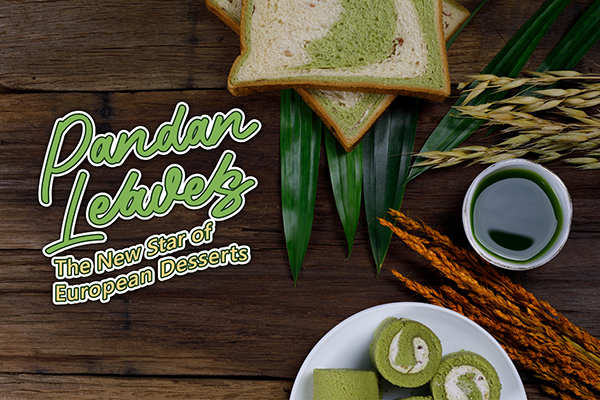
Long, slender, and blade-shaped, pandan leaves are instantly recognizable by their deep, glossy green color and fresh, grassy aroma. Often growing up to half a meter long, the leaves fan out from the base of the plant and resemble palm or lemongrass leaves. Pandan comes from tropical Asia, where it has been used for centuries in cooking, rituals, and everyday life. If you’ve ever wandered through a Southeast Asian market and noticed a soft, sweet scent—somewhere between vanilla, almond, and freshly cut grass—chances are pandan was nearby.
The pandan plant does produce flowers, though they are less well-known than the leaves. The flowers are small, pale, and fragrant, growing in clusters. In some regions, particularly Indonesia, the male pandan flower (pandan bunga) is dried and used as a natural flavoring. Still, it is the leaves that have become the star, thanks to their versatility and unmistakable aroma.
Traditionally native to countries such as Thailand, Indonesia, Malaysia, and the Philippines, pandan is now quietly making its way into European kitchens. In recent years, it has become especially popular in big cities like Paris, London, and Amsterdam, where chefs and bakers are always on the lookout for new flavors. In Europe, pandan is most often used in desserts—think pandan cakes, custards, waffles, and even ice cream. Because fresh leaves are hard to source, pandan is usually sold frozen or as an extract in Asian grocery stores. Frozen leaves are preferred by chefs who want a more authentic aroma, while extracts are popular for their convenience and bright green color.
To truly understand pandan, however, you need to travel to Thailand, where the leaf is woven into daily life. Known locally as bai toey, pandan thrives in the country’s warm, humid climate. It is easy to grow and often planted near homes, along fences, or beside canals. Many Thai families grow pandan in their gardens, ready to be harvested whenever needed.
In Thai cuisine, pandan is both practical and poetic. The leaves are used to flavor rice, infuse syrups, scent desserts, and even wrap savory foods. One famous dish is gai hor bai toey—chicken marinated, wrapped in pandan leaves, and fried. The leaf perfumes the meat while keeping it tender, a perfect example of flavor meeting function. Pandan is also used in traditional sweets, drinks, and temple offerings.
Beyond the kitchen, pandan has a story rooted in tradition. It has long been valued for its natural fragrance, used to scent rooms, wardrobes, and ceremonial spaces. Some Thais even associate pandan with comfort and home, as its smell often brings back memories of childhood kitchens and family gatherings.
So next time you’re in Thailand and spot those long green leaves at a market, take a closer look. Pandan may be humble, but it carries the scent of Asia, a taste of tradition, and a little bit of magic—proof that sometimes, the best souvenirs aren’t things you pack, but flavors you remember.
May 2026.