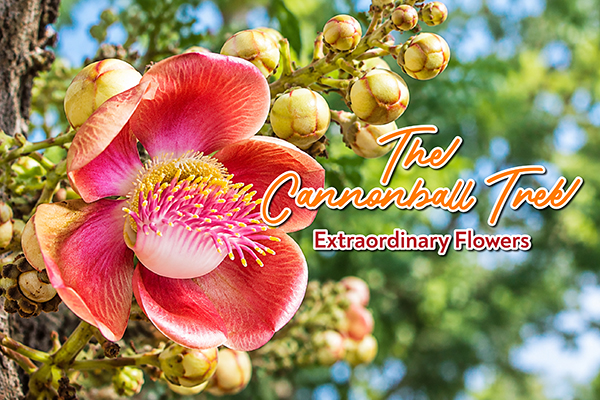
Few tropical trees are as unusual as the Cannonball Tree (Couroupita guia-nensis). Native to northern South America, it is now widely cultivated in Thailand, where it is often found in gardens and around temples. Thailand’s Department of National Parks records its flowering and fruiting season mainly from April to October.
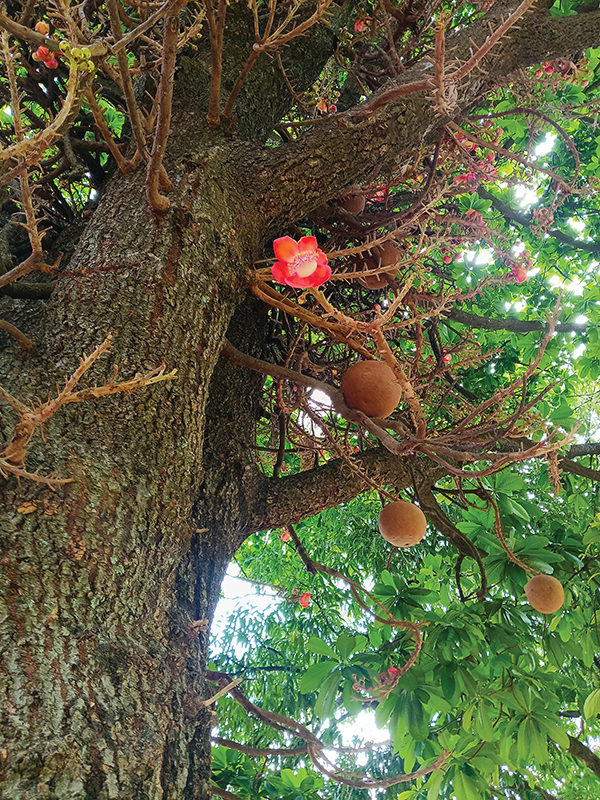
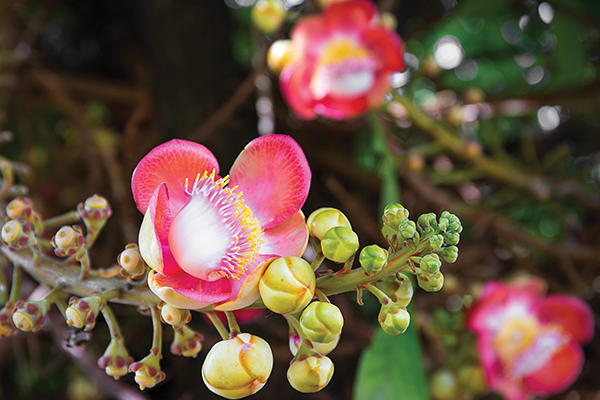
The tree’s flowers are perhaps its most remarkable feature. Instead of growing at the tips of branches, they emerge directly from the trunk and large branches — a phenomenon known as cauliflory. Long, woody stems carry clusters of large, waxy flowers, each typically around 5–12 centimetres across. The six fleshy petals are usually pink to deep red, sometimes with yellow colouring, surrounding an extraordinary central structure of yellow stamens and a distinctive pink-and-white, almost anemone-like arrangement. Most striking of all, the flowers are intensely fragrant and last for only about a day, so seeing a tree in full bloom is a memorable experience.
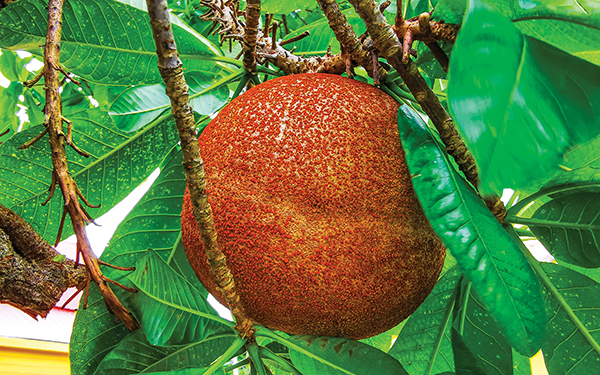
After flowering come the fruits that give the tree its name. Growing directly from the trunk and main branches, these enormous, round fruits can reach around 20 centimetres or more in diameter. Their hard, woody shells turn rusty brown as they mature, making them look remarkably like old cannonballs hanging from the tree. Inside is a jelly-like pulp containing hundreds of seeds, but the ripe pulp develops a strong, unpleasant smell and is rarely eaten.
So what is the fruit used for? Traditionally, different parts of the tree, including the fruit pulp, have been used in folk medicine, particularly in South America and India. Modern research has investigated its potential wound-healing and antimicrobial properties, although these should not be confused with established medical treatments.
The hard fruit shells have also been traditionally reused as natural containers and utensils, while today the tree is prized primarily as a spectacular ornamental and botanical curiosity.
November 2026.